The Credit-Roll Assumption: Why Job Titles Rarely Tell the Whole Story
A production credit names a role, not a full contribution. Learn how to read titles alongside context, collaboration and the work visible on screen.
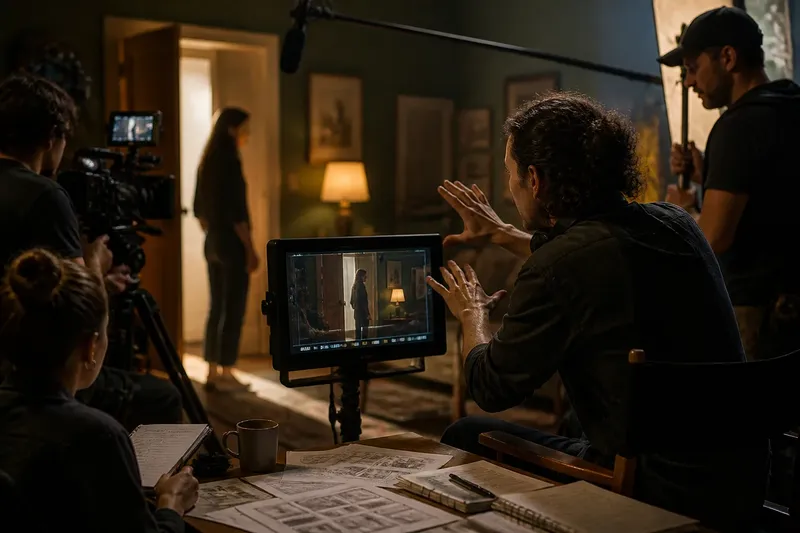
A production credit names a person’s recognised role, but it rarely describes the full contribution behind a show. Read a credit as a useful starting point, not a complete account of who shaped a scene, solved a problem or carried an idea from draft to screen.
The distinction matters because a screen production is collaborative and its work is divided in practical, contractual and creative ways. A title can tell you where someone sat in that structure. It cannot, on its own, tell you how much discretion they had, which decisions they made or how their work changed during production.
A credit identifies a role within a production structure
Film and television credits organise a large body of work into named roles. “Editor”, “production designer” and “writer” are not decorative labels: each points towards a recognised area of responsibility. They help audiences, colleagues and employers understand how a production was staffed, and they give skilled workers a visible record of their participation.
Yet the title is a category, not a transcript. The credit “editor” does not tell you whether the person worked closely with the director from the first assembly, concentrated on a particular episode, or joined later to refine scenes. “Writer” does not reveal whether a credited person originated the characters, revised dialogue, adapted an existing outline or contributed material under a particular arrangement.
Even apparently straightforward roles contain variation. A director may guide performances and visual choices while depending on department heads to develop detailed approaches within their fields. A producer’s remit can differ according to the project and the production’s arrangements. The title supplies a broad map; the actual route depends on the work.
The screen result is made through connected decisions
Most visible choices have several contributors. A character’s entrance, for instance, may begin as a script direction, gain shape through blocking, depend on a set layout and acquire its final emphasis in the edit. The performer’s timing matters too. A credit roll cannot divide that finished moment into neat shares, because the result emerges from interaction among people and departments.
This is not a reason to treat every contribution as equal or every credit as vague. It is a reason to distinguish between a named responsibility and the many decisions that feed into a finished piece. Some workers originate a choice; others interpret it, make it possible, adapt it to constraints or select among alternatives. Those forms of contribution are different, even when all are necessary.
Consider an invented situation: say a television scene is written to end with a character silently leaving a room. The director might work with the actor on the pause before the exit; the production designer may have arranged the doorway and furniture to make the movement legible; the editor may choose the cut that preserves the character’s hesitation. The writer’s credit remains meaningful, but it does not describe every creative decision that gives the ending its effect.
Credits can reflect recognition as well as task
Credit placement and wording can be shaped by agreements, established conventions and production arrangements. A credit may recognise a defined contribution, satisfy a contractual understanding or follow the format used for a particular kind of programme. The precise meaning of a title is therefore not always identical from one production to another.
There can also be a gap between the work someone did and the credit they received. A person may contribute ideas without receiving a separate screen credit, while another person’s credited role may cover work delegated across a team. Neither possibility should be assumed in a particular case without reliable information. The roll alone cannot settle questions of authorship, influence or fairness.
That limitation matters when audiences use credits to make claims about creative ownership. It is reasonable to say that a credited person held a particular role. It is less sound to infer from the title alone that they made every decision in that area, or that an uncredited person had no influence. Credit is evidence of recognition within a system, not a complete record of the room.
How should a viewer read a production credit?
Does a credit tell me exactly what someone did?
No. It identifies a recognised role, but the work covered by that role can vary by production and by the person’s particular assignment. Treat the title as a clue and seek a fuller account before attributing a specific decision.
Does a shared credit mean the contributors did identical work?
Not necessarily. People sharing a title may have divided the work by episode, sequence, stage or specialism. The credit identifies a shared category of responsibility without spelling out that division.
Can I infer who made a creative choice from the credits?
Usually not from the roll alone. A choice visible on screen may reflect several departments, and the final version may have changed during filming or editing. More detailed production notes or direct accounts can provide context, though each account still has its own limits.
Why do credit formats differ between productions?
Credits are shaped by the type of production, its working arrangements and the conventions it follows. A familiar title may therefore have a broadly recognisable meaning while covering a different practical scope in another programme.
Look for context before assigning creative ownership
When a credit raises a question, begin with what it can safely establish: the person was credited in a stated role. Then look for information that clarifies scope, such as episode-specific credits, programme notes, interviews or an organisation’s description of the role. Compare accounts carefully; a brief promotional description may simplify a process that was more collaborative.
It also helps to separate kinds of credit. An on-screen title may reflect a formal production role, while publicity may foreground a performer or creator for reasons of audience recognition. A programme’s opening titles, closing roll and episode information may give different levels of detail. None should automatically be treated as the definitive map of every contribution.
For a viewer, this approach makes discussion more precise. Instead of saying that one person “did” a whole aspect of the show, you can identify the credited role and describe the visible choice without overstating its origin. For a student or aspiring worker, it prevents a title from being mistaken for a complete job description: the practical remit is best understood through the production’s own account and the work itself.
Use the roll as a doorway, not a verdict
The credit roll remains valuable. It makes labour visible, preserves professional recognition and gives viewers a route into the many roles behind a production. Its limits do not make it meaningless; they make careful reading more important.
So when a familiar title appears, ask what it identifies and what it leaves open. A production credit is a compact label attached to a complicated collaboration. Read it that way, and the names on screen become more informative without being asked to tell a story they were never designed to contain.