Rehearsed Once or Repeated Often? Two Ways to Prepare a Live Segment
Light rehearsal versus repeated rehearsal shapes a live segment’s spontaneity, consistency and timing; choose the approach that fits its format and risks.

Light rehearsal versus repeated rehearsal is a choice about what a live segment must reliably deliver. A host introducing a guest can benefit from room to respond; a tightly timed comedy bit with music cues may need a dependable sequence. The right amount of practice depends less on whether a segment is serious or entertaining than on what can change without damaging it.
Think of rehearsal as deciding which parts to make stable. You can fix the order of cues, the wording of a safety announcement or the hand-off to a camera, while leaving a host’s response to an unexpected answer open. A segment need not be either wholly improvised or memorised line by line.
Choose light rehearsal when the value lies in response
A lightly rehearsed segment suits conversations whose interest comes from listening: a presenter interviewing a guest, taking questions from an audience, or reacting to a live performance. In these formats, a rigid script can make the host appear to wait for the next line instead of engaging with what has just happened.
That freedom still needs a frame. Agree on the opening, the main subject, any topics that are out of bounds, and the point at which the segment should end. The host can prepare concise questions and transitions without scripting every reply. A producer can mark a final cue, such as a card or a quiet instruction through an earpiece, so the conversation has a clear exit even if one answer runs long.
Use light rehearsal when the participants are comfortable with the format, the subject can support a genuine exchange, and the segment can flex within the wider running order. It is especially useful when a guest may bring an unexpected perspective that the host should be able to follow rather than steer back to a prepared sentence.
It is a weaker fit when one missed line would leave a performer exposed, when several people must speak in exact sequence, or when the next item depends on a precise hand-off. In those cases, keeping the conversation natural does not require leaving the mechanics loose: rehearse the opening and ending, and make the cue between them unmistakable.
Choose repeated rehearsal when coordination carries the segment
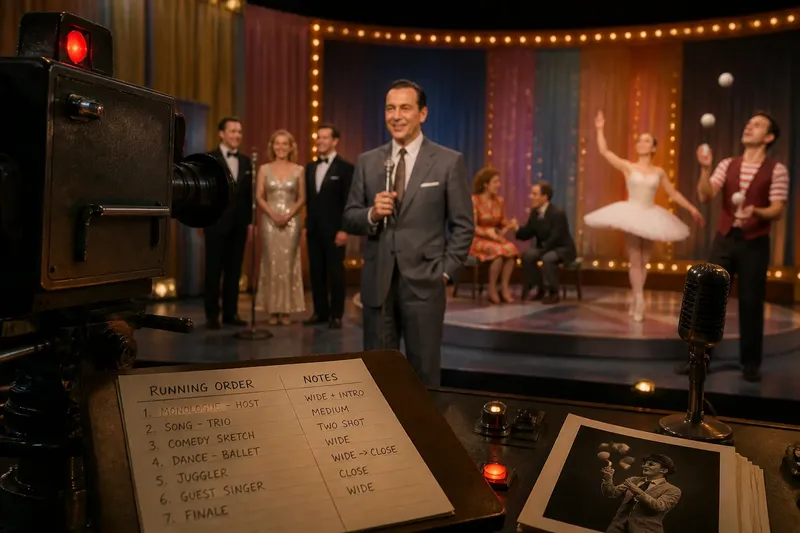
Repeated rehearsal suits material that depends on several elements meeting in the same order: a presenter speaking over a film clip, a sketch with entrances and sound effects, a musical introduction, or a live demonstration with a camera close-up. Each participant needs to know not only their own line but also what signals the next action.
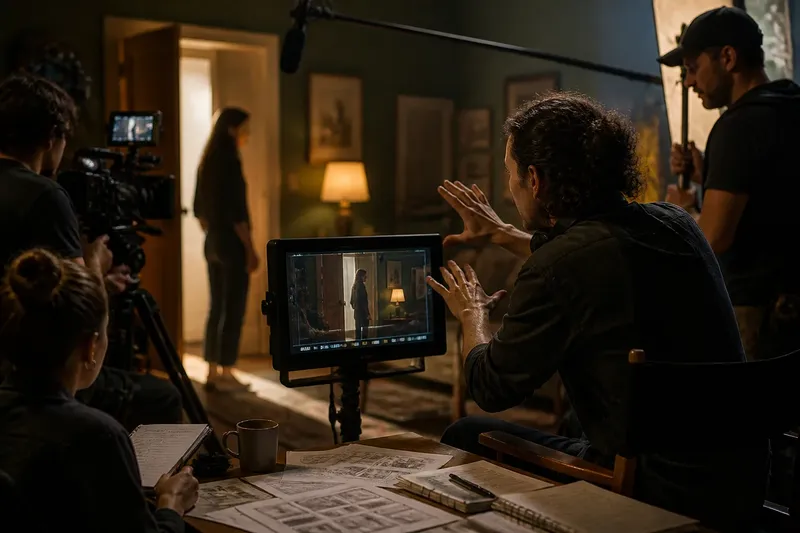
Repetition gives the team a shared rhythm. The floor manager can see where a cue belongs, the director can call a cut with confidence, and a performer can concentrate on delivery rather than searching for the next mark. It also gives the group a chance to notice awkward pauses, unclear transitions and moments when speech competes with music.
Choose this approach when timing affects the whole programme, the segment contains multiple cues, or the audience must understand a carefully ordered sequence. A tightly repeated run-through is also sensible when cast members are unfamiliar with one another and need to establish how they pass focus, share a prop or cover a pause.
Repetition has a cost: it can make a segment feel over-polished if performers reproduce the rehearsal mechanically. The aim is to practise the sequence, not to remove every trace of thought from the performance. Keep a distinction between fixed actions, such as a cue or entrance, and flexible choices, such as emphasis, facial response or a brief exchange with the audience.
Let the segment’s dependencies decide how much to fix
A useful decision starts with consequences. If a line changes, does another performer lose their cue? If a response runs long, can the director shorten the next beat? If a camera needs a close-up at a specific moment, does the performer know how to make that moment visible? Each answer reveals which parts need shared practice.
Separate the segment into three kinds of material:
- Fixed: cues, entrances, essential wording, technical hand-offs and the final exit.
- Flexible: reactions, phrasing, examples and the order of questions within an agreed subject.
- Recoverable: moments where a performer can pause, paraphrase or move to the next prompt without confusing the audience.
Rehearse fixed material until everyone recognises the cue and knows what follows. For flexible material, practise listening and the boundaries of the exchange rather than memorising a single version. For recoverable moments, decide in advance who can signal a reset and what the audience will see if it happens.
Say a live arts programme plans a short conversation with a visiting dancer, followed by a video clip and a closing announcement. The host and guest might lightly rehearse the opening and likely topics, while the director repeatedly practises the hand-off to the clip and the return to camera. The expected observable result is an exchange that can respond to the guest while the clip and closing cue still land in their intended places.
Protect spontaneity without making timing vague
Spontaneity is not the same as uncertainty about the format. A host can improvise a follow-up while knowing the segment’s remaining time, the subject’s limits and the signal to wrap. Performers can react naturally to one another while keeping an agreed entrance or musical cue intact.
Give participants a usable timing signal rather than an abstract instruction to “keep it moving”. A floor manager might show a discreet card, or the producer might send a quiet cue through the presenter’s earpiece. Agree what the signal means before going live: shorten the next answer, skip an optional question, or move straight to the closing line.
For a repeated segment, allow small variations in delivery where they do not disrupt the next cue. A performer may change a pause or respond to a laugh, while preserving the line that triggers the sound effect. For a lightly rehearsed segment, keep one or two prepared routes back to the main subject, so a lively detour does not become a separate conversation.
Do not ask performers to protect timing by speaking faster. Rushed delivery can make a guest difficult to understand and can strip a joke or reveal of its intended space. If the segment consistently overruns in rehearsal, adjust its shape: remove a question, shorten a clip or make the closing cue earlier.
How should you decide between the two approaches?
How much rehearsal does an interview need?
Rehearse the opening, the subject boundaries and the ending, then leave the answers open. Add more practice if the interview includes timed clips, several presenters or a fixed transition into another item.
Should a comedy segment be repeated often?
Repeat the cues, entrances and sequence that make the joke legible, but do not require every laugh pause or audience response to match a run-through. The performers need a stable structure and enough room to adjust their delivery to the room.
What if the segment must fit a strict running order?
Use repeated rehearsal for the transitions and any material that controls the next item, then identify optional beats that can be cut. A clear wrap signal gives the host a way to finish without making every sentence sound timed.
Can a segment mix both methods?
Yes: fix the structure and rehearse the cues, while leaving conversation and performance choices flexible. This hybrid suits many live formats because it protects the programme’s timing without asking every moment to arrive in exactly the same form.
Make the final rehearsal serve the performance
Before going live, run the transitions that involve more than one person or department. Check that the host knows the wrap signal, the director knows which moment can be shortened, and performers understand which cues cannot move. A full run-through is useful when the sequence is complex; for a conversational segment, a short cue check may preserve energy better than repeating the entire exchange.
After rehearsal, make only changes the team can communicate clearly. A last-minute rewrite can unsettle a repeated sequence if the performer, floor manager and director are working from different versions. For lightly rehearsed material, a change in the main question may be manageable, but a changed ending still needs to reach everyone who must cue it.
Light rehearsal versus repeated rehearsal is not a contest between authenticity and control. It is a way to decide where control belongs. Fix the moments that carry other people’s cues, leave room where listening creates value, and make the wrap signal clear enough that the segment can finish as a performance rather than a scramble.
When the format returns, use the live run to refine only the parts that caused visible hesitation or unclear timing. That gives the next rehearsal a specific purpose: strengthen the segment’s weak link while leaving its successful freedom alone.