A Watch Party Built Around One Costume Change
A costume-change watch party gives your group one easy visual prompt and a practical plan for sharing observations without turning the evening into a quiz.
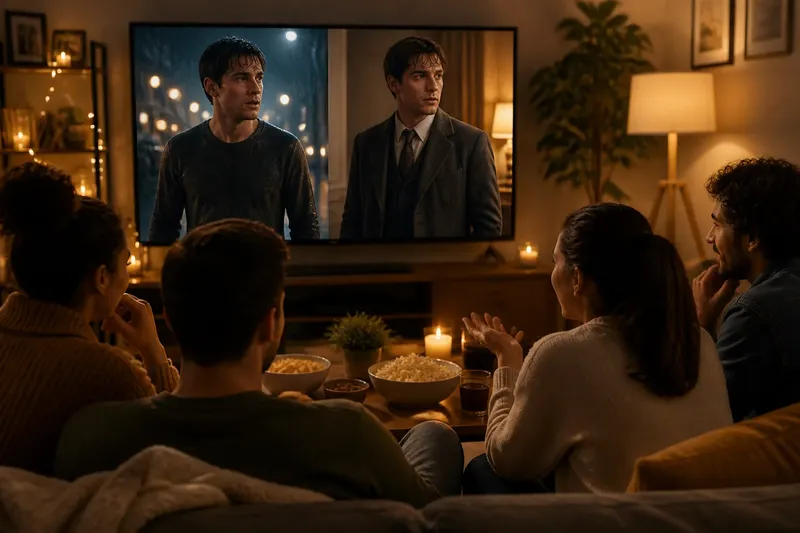
A costume-change watch party works best when everyone has one detail to notice and no pressure to interpret it correctly. Choose a film or episode with a visible change in clothing, invite people to watch for what shifts around it, then leave room for reactions that do not depend on knowing costume terminology.
The change might be a character exchanging a work jacket for evening clothes, or appearing in uniform after a scene in ordinary dress. The point is not to identify a designer’s intention. It is to share attention: what does the new outfit make you expect, and does the scene meet that expectation?
Choose a change that is easy to notice
Start with a title the group can access and enjoy even if nobody has seen it before. The costume change should be clear in the viewing itself, rather than something guests need to spot in a trailer, still image or plot summary. A move from muddy clothes to a clean coat may be immediately legible; a subtle shift in fabric or colour may suit a group that already knows the story.
Consider the viewing conditions. A dim room, a small laptop screen or a busy scene can make details hard to see. You do not need to pause or replay the moment; choose a change that reads at ordinary viewing distance and gives people something to discuss afterwards.
Keep the invitation modest. Tell guests that the evening has a costume-change prompt, but do not announce the exact moment or ask them to study the film in advance. If someone prefers to know the title beforehand, share it privately or include it in the invitation; otherwise, keep the surprise intact.
Make the practical arrangements early
Check that the title is available in a format your guests can use. Confirm its running time and whether the version has adverts, subtitles or an interval that may affect the evening. If access differs between guests, choose another title rather than turning the invitation into a troubleshooting exercise.
Send a short invitation with the start time, address or viewing link, and a clear note that this is a relaxed watch, not a quiz. Mention useful details, such as whether you will provide snacks or guests should bring their own. Avoid explaining what the clothes signify; interpretation is the shared activity.
Before the day, check that the screen, speakers and playback device are ready. For an in-person gathering, arrange seats so everyone can see comfortably and leave space for drinks. For a remote watch, agree on how to synchronise playback and how guests can speak without talking over the film. A group chat can handle timing and quick practical messages.
Give people time to arrive and settle before starting. If someone joins late, bring them in without explaining the prompt or recapping the plot over the film. Keep the room’s attention on the screen; the prompt should be light enough to survive a missed detail.
- Check whether every guest can access the chosen title; if they can, keep it, and if they cannot, choose a title available to the whole group.
- Check whether the costume change is visible on the planned screen; if it is clear at ordinary viewing distance, keep the selection, and if it is subtle, choose a more legible scene or title.
- Check the version’s adverts, subtitles or interval; if they fit the evening, share the start plan, and if they disrupt it, select another version or title.
- Check that seats give everyone a clear view; if they do, leave the arrangement, and if someone’s view is blocked, move the seat or screen before starting.
- Check whether remote guests can start the same version together; if they can, agree on a start cue, and if they cannot, settle access before inviting discussion.
- Check whether the invitation explains that this is not a quiz; if it does, send it, and if it sounds like a test, rewrite it as a relaxed invitation to notice one change.
Offer a prompt, not a test
Before pressing play, offer one open question: “Notice what changes when the character changes clothes, if anything.” That wording leaves several valid responses. Someone may notice a shift in confidence, a new setting, a change in how other characters behave, or no particular effect at all.
Do not ask guests to name a period, designer, fabric or technical method unless that is the group’s chosen interest. Such questions can make a casual gathering feel like an exam, and many viewers will not have the vocabulary to answer. A simple observation—“the coat makes the character seem more formal to me”—is already a useful contribution.
Imagine you choose an invented scene in which a character arrives in a rain-soaked jumper and later appears in a pressed jacket before meeting a relative. You invite guests to notice whether the change makes the meeting feel guarded or ceremonial. After the scene, one person reads the jacket as an attempt to impress, while another sees it as clothing suited to the occasion; the group can compare those readings without claiming either one is the correct answer.
Let the film play without interruption
Once the film or episode begins, resist the urge to point out the change as it happens. A whispered cue can pull attention away from the performance, while pausing to inspect the clothes can make the gathering feel more analytical than intended. Let viewers notice the moment for themselves, or miss it and catch up through the conversation afterwards.
If the group is large, make space for quieter guests. Do not go around the circle demanding an opinion. A pause after the viewing gives people a chance to speak naturally; if conversation stalls, ask what they remember about the scene’s mood before asking specifically about the clothes.
For a remote gathering, agree in advance that everyone will watch at the same pace and save comments for the end. A chat thread can collect quick reactions, but it may distract people from the screen. If guests prefer to message, suggest keeping notes and sharing one observation later rather than live-commenting through the scene.
Use the costume change to open conversation
After the viewing, begin with what people actually saw: when the outfit changed, which details stood out, and whether the scene’s tone seemed different afterwards. Then widen the conversation gently. Did the clothing seem chosen by the character, imposed by the occasion, or simply part of the story’s visual world? Did another person react to it? These questions invite interpretation without pretending the group knows the production’s private reasoning.
Make room for disagreement without turning it into a verdict. A costume can read as confident to one viewer and uncomfortable to another, depending on what they noticed in the performance or story. Ask what in the scene led them to that reading, then let the contrast stand. The pleasure is in seeing how one visual detail changes the way people describe a moment.
If the conversation moves towards costume craft, keep it grounded in what is visible: the cut, colour, condition or contrast with the previous outfit. Avoid presenting guesses about materials or production choices as fact. A guest with knowledge of costume work can share context while leaving room for everyone else’s reading of the scene.
Keep the gathering flexible
A chosen scene may be less obvious than expected, or the group may focus on a different detail altogether. That is not a failed watch party. Use the prompt as a doorway, not a target: ask what held people’s attention and follow that thread. If nobody noticed the change, describe the relevant moment after the viewing rather than rewinding it to test who missed it.
If the title proves difficult to access, choose another work with a clear change and send a brief update. If a guest has already seen the film, ask them not to reveal the moment in advance, but do not make them responsible for guiding the room. The host’s job is to make the evening easy to join, not to manage everyone’s interpretation.
Questions for keeping the conversation open
What should I say before the film starts?
Keep it to one invitation, such as noticing what changes when a character changes clothes. Explain that there is no correct answer and nobody needs costume knowledge.
Should I pause the film at the costume change?
Usually, let the scene play through so the clothing stays connected to the performance and story. If the group wants a closer look afterwards, discuss the moment from memory rather than interrupting the first viewing.
What if guests interpret the outfit differently?
Ask what each person noticed in the scene, then allow the readings to coexist. The goal is to compare observations, not decide which viewer has decoded the costume correctly.
Can this work for an online watch party?
Yes, provided guests can access the same version and agree how to start together. Save discussion for after the viewing or use a quiet message thread so conversation does not obscure the scene.
A costume-change watch party needs little more than a suitable title, a clear invitation and room for different readings. Notice which question brings people into the conversation; next time, another small visual choice can give the group a fresh point of attention without turning the evening into homework.